Welcome to Water and Glass - a digital zine and scrapbook. It’s intended to be a messy collection of work, fragments of ideas, and process. I don’t want to spend ages in dev making this website better because it’s first and foremost a place for me to get stuff down.
This website is very much designed for web, and only web. I haven't optimised it for mobile because it's a scrapbook, and also I cba. Not everything is directly optimised for mobile, just go and load it on a computer instead.
The images have been loading while you’ve been reading this, and there’s no more text now - so if the button below isn’t black yet, you’ll just have to wait a second. It’s really not that bad. Your attention span just sucks because you spend too much time online.
PROCESS &
EXPLORATION
2025
Not A New Beginning - It Just Ended
Welcome to the first issue of my digital scrapbook/zine. I’m getting started on my New Year’s resolutions early this year - by curating a space to display my work. Actually, it’s less about the work, and more about the process and exploration - as the title says. This project is intended as a way for me to combat the gnawing feeling I constantly have that:
1. I take on too many hobbies and so achieve mastery in none
2. My interest in a hobby fades too quickly to produce results
3. I never finish anything
I think this is a feeling many people share, particularly those with a polymath spirit. I’ve come to realise this is partly because the truth of the matter is that I enjoy process and exploration over finished results and mastery. I often prefer breadth over depth - which means I try out many things, often abandoning them once I’ve proven to myself that I could master something if I really wanted to. I’m trying to embrace the idea that my skill lies in finding resonance between channels, rather than depth in any one. And I’m trying to remember this by having something messy and unresolved to show for it.
Sticking with my love for liminal spaces, and living life dangerously on the edge of a boundary, this is intended as neither a public nor a private space - not something I’m truly ready or willing to share, but equally not something I’m able to keep quiet.
The issues are intended to be a very loose collection of ideas, projects, thoughts, writing, photos, drawings, code, buildings, design, hobbies, and any other toy I pick up and toss away - more focused on documenting process and exploration than on producing a finished product.
In an attempt to replace those three initial false concepts, I’ve decided instead to redefine my notion of success as:
1. Valuing breadth over depth, and resonance between channels
2. Not valuing mastery-for-its-own-sake, but valuing exploration - and recognising that exploration does not produce polish or confidence, but it does produce fragments and taste
3. Creating a space (here) where work accumulates rather than vanishes - where the process is the result itself
As I said, this place is a scrapbook, so it’s not optimised for mobile - it’s not really optimised at all. It’s got loads of images and videos, and I can’t be bothered to improve the “user experience” and make it load and scroll nicely, like you’re all used to. You’ll just have to fucking wait for it to load if you want to see it - you’re hardly meant to be here anyway.
Is it really so bad to have to wait three seconds for an image to load? Fix your attention span. Be more patient. Grow up.
REFLECTIONS & SHADOWS
REFLECTIONS & SHADOWS
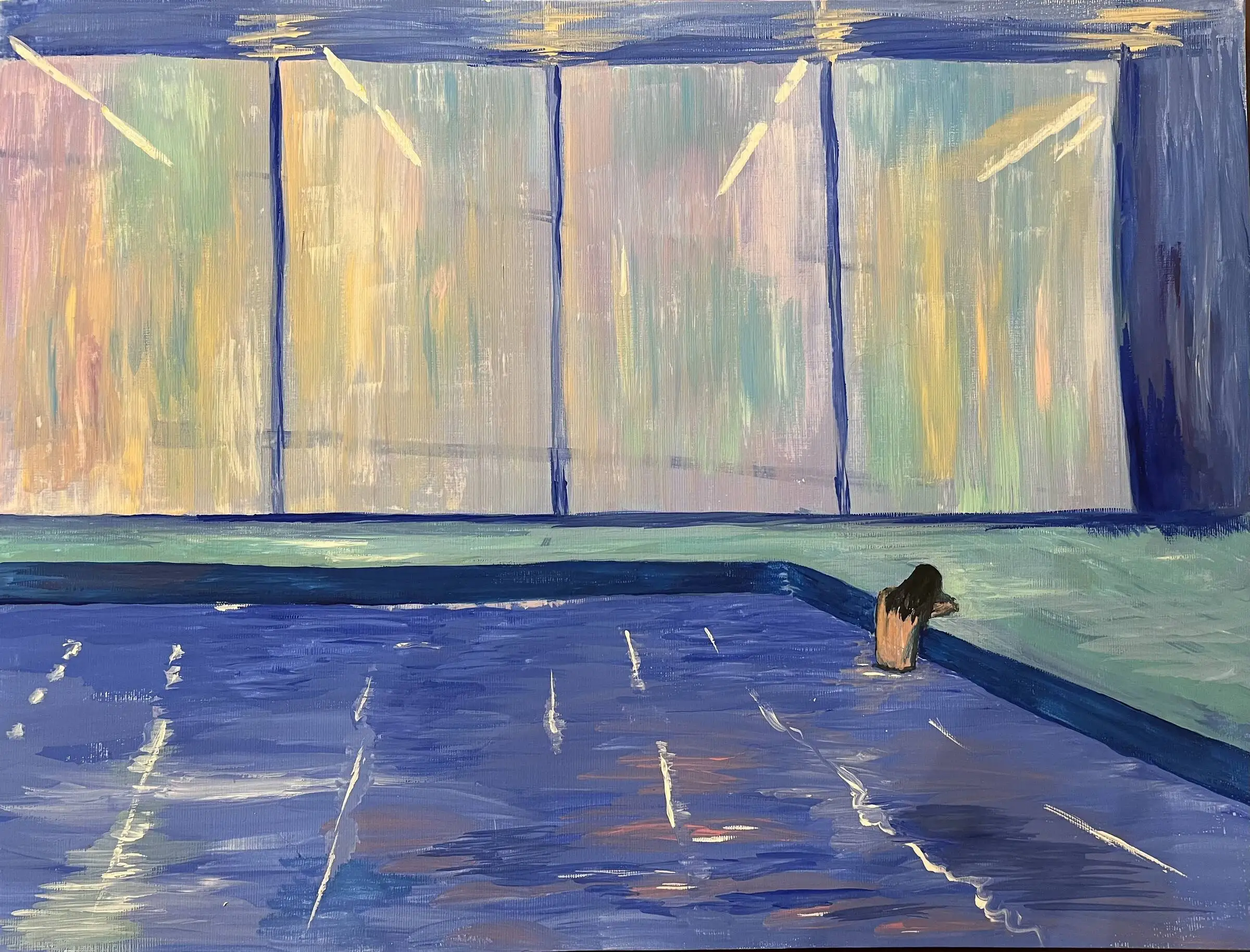
It's only in looking back over my creative output this year that I've been able to see this consistent theme - I take many pictures and recordings of reflections and shadows. In the dance section below, you'll see how I used my shadow as the expression of the dance instead of direct footage. Reflecting (excuse the pun) on why this is, I think there is something fun about how hidden the form truly is. With the dance footage, it becomes a kind of quest to try and resolve what was happening in the original. It gives the viewer more to put together, and that makes it unexpected and fun.
When I think about data, or software, or the internet, or quantum computing - or even language and expression themselves - I often ruminate on how "lossy" these channels are. Information never truly reaches its destination undisturbed. Sometimes I think about how lonely that is: the thoughts and feelings inside your head sit there alone, and despite your best efforts to eject them into the world, they leave only ripples of intention - shadows - and never the "real" thing.
This also connects to my interest in maths and physics - and in particular to ideas of projection and mapping: what happens when you move something from one dimension to another, higher or lower, and what information survives that journey. (Side note: one of the first popular science books I ever read, when I was 14, was Hyperspace (by Michio Kaku) - and to this day I think it’s had a profound effect on me.) A projection is never neutral. Something is always lost, compressed, or distorted in the act of mapping - but sometimes something else can be gained.
Dancing with shadows is, in a sense, a deliberate flattening of form: a three-dimensional, moving body collapsed into a two-dimensional trace. But that loss is exactly what makes it fertile. The viewer is handed an incomplete signal and asked to do some of the work themselves - to mentally project it back up again, to imagine the missing depth, weight, and intention. In that way, the shadow isn’t a lesser version of the dance; it’s a prompt - a collaborative act between what is shown and what is reconstructed.
I think there's also an element of self-preservation here too. If you hide some of yourself back, you leave room for people to interpret it, and thus absolve yourself of the pain of truly being seen. Who can say whether the original dance was bad? Who can really judge the outline of a nipple in a shadow, if you never really saw the whole thing? It was 2025, for god's sake - can't a woman take a provocative, sexual selfie and broadcast it to the world without judgement?
Perhaps this is why I'm drawn to these liminal forms - reflections, shadows, fragments. They exist in the space between what is and what might be. They suggest without revealing, invite interpretation without demanding it. In a world that often feels too exposed, too immediate, too demanding of clarity, these half-seen forms offer a kind of refuge - a space where meaning can be constructed rather than consumed.